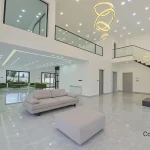
Villa Living-Room Lighting: Write the Use Scenarios Before Choosing Fixtures

Planning villa living-room lighting begins with understanding what happens in the room. Reading beside a window, a family conversation and putting things away after visitors leave are different situations. Written use scenarios help the designer connect each lighting proposal to a clear purpose. The brief below supports that discussion; it does not prescribe fixture quantities, electrical details or a particular product.
Record each activity together with its location
On a copy of the furniture plan, mark where people read, talk, watch a screen or work on a hobby. Note how many people use each area and whether the location is fixed. “Make the living room bright” offers little basis for comparing proposals. “One person reads in this chair while others talk on the sofa” gives the designer a more useful situation to address.
Separate daytime, evening and gathering scenarios
Make distinct notes for arriving in the evening, a quiet night and a larger gathering. Identify the active areas and those that remain in the background. IKEA’s living-room lighting guide also distinguishes general, task and mood lighting. Those roles provide a useful vocabulary for describing needs. They do not establish a requirement to buy three fixtures or select the products shown.
Show viewing directions and fixed features
Mark the screen, mirror, artwork, shelves and reflective surfaces on the same plan. Identify the seats from which people look towards them. The designer needs to review the proposed light in relation to actual furniture and views. A drawing that shows only the ceiling and light fittings leaves part of that relationship unexplained. Keep uncertain furniture positions visible as unresolved decisions.
Describe controls through everyday use
- Which setting should be easy to reach on arrival?
- Does someone need to change one area independently?
- Which activities would need review if the furniture moved?
- Which controls should a visitor understand without a lengthy explanation?
The design team and relevant specialist determine the electrical arrangement and equipment compatibility. At this stage, describe the intended result so that a device name does not replace the underlying requirement.
Review proposals against the same scenarios
For each option, record the activity, the person’s position, the lights involved and any unanswered question. When one person reads, for example, what happens in the conversation area? Add the outcome to the villa design brief. Revisit the lighting scenarios whenever the furniture layout changes. Linking use to the plan makes the decisions easier to follow during the next design review.